Table Of Content
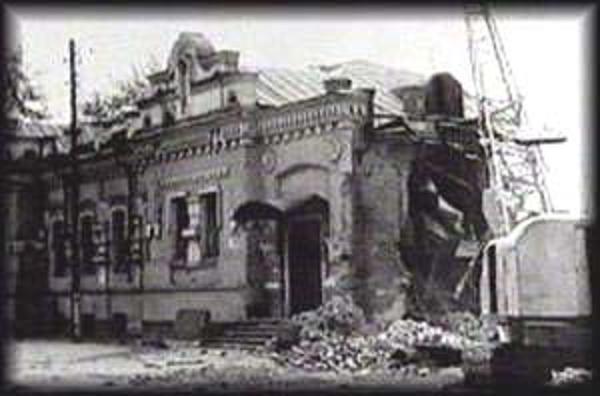
- What Happened to the House Where the Romanovs Were Killed?
- A chandelier and the fate of the Romanovs
- Murders
- Qatar’s mediation efforts in Israel-Hamas war come under fire
- Murder of the Romanov family
- What is the Order of the Companions of Honour - the new distinction given by King Charles to the Princess of Wales?
- The Race to Save the Romanovs: The Truth Behind the Secret Plans to Rescue the Russian Imperial Family
Maria’s son Nicholas was the last ruler of Russia—and also the first cousin of King George V, Elizabeth’s grandfather. Unlike most of The Crown’s fifth season, episode six does not take place in the 1990s. Instead, it opens in World War I–era Britain, when the House of Windsor was headed not by Queen Elizabeth but by her grandfather King George V and his wife, Queen Mary. That was the end of Nicholas Romanov's family but the saga of the burial and their death's investigation just began.
What Happened to the House Where the Romanovs Were Killed?
But it was not till 2007 that the missing remains of Maria and Alexey would finally be discovered. Nikolai Sokolov devoted his whole life to collecting documents and evidence relating to the murder of the Romanovs. His research provided the basis for the book “The Murder of the Imperial Family. From the Notes of Judicial Investigator N.A. Sokolov,” published in 1925, which, according to some, shows signs of third-party editorship.
A chandelier and the fate of the Romanovs
'The Crown' Season 5, Episode 6 Recap: 'Ipatiev House' - Vulture
'The Crown' Season 5, Episode 6 Recap: 'Ipatiev House'.
Posted: Thu, 10 Nov 2022 08:00:00 GMT [source]
His only son to survive into adulthood, Tsarevich Alexei, did not support Peter's modernization of Russia. Near the end of his life, Peter managed to alter the succession tradition of male heirs, allowing him to choose his heir. This was an attempt to secure the line of her father, while excluding descendants of Peter the Great from inheriting the throne.
Murders
Repeated tests here and abroad, using DNA-matching techniques and computer imaging that fits disinterred skulls with old photographs, have proven beyond any reasonable doubt that the bones are those of the Romanovs. Still, radical nationalists and some factions of the Russian Orthodox Church refuse to accept the research findings and insist on further investigation. Possession being nine-tenths of the law even in lawless Russia, Rossel refused to deliver the remains to forensic emissaries from Moscow in November when a special armored train was sent here by the federal commission to collect the bones for final tests. Not to be outdone, Yekaterinburg Gov. Eduard Rossel has already ordered the design of a crypt and memorial on the property of the razed Ipatiev House, where a dozen Bolshevik gunmen carried out the royal slaughter. The fact that Nicholas was forced to abdicate more than a year before his execution also bolsters the arguments of those who are against his being interred among those who died as sitting monarchs. European monarchs and distant Romanov relatives living in exile are to be invited to a soul-cleansing memorial ceremony, likely to be held on this July’s 80th anniversary of the executions that served as a chilling reminder of the risks of being royal.
Qatar’s mediation efforts in Israel-Hamas war come under fire
In an attempt to refine the results of the investigation, Russian authorities exhumed the remains of Nicholas II’s brother, George Alexandrovich. George’s remains matched the heteroplasmy of the remains found in the grave indicating that they did in fact belong to Tsar Nicholas II. Constantine Pavlovich and Michael Alexandrovich, both morganatically married, are occasionally counted among Russia's emperors by historians who observe that the Russian monarchy did not legally permit interregnums.
Murder of the Romanov family
Among the inquiries were demands to prove the origin of two teeth found in the Koptyaki pit that cannot be traced to any of the nine skeletons. Most controversial of the questions was the demand for determination of whether the royals had been beheaded--a conclusion demanded by fringe nationalists who claim the Romanovs were ritually murdered by Freemasons and Jews and that their heads were severed as part of the killing process. But as seen in the episode, other characters, such as Lady Penny Knatchbull, also think it’s possible that George V was less worried about strained relations with Germany and more concerned that his wife, Queen Mary, was jealous of the czarina. The Crown posits that the two grew up together in Germany as princesses and that Mary only became engaged to King George’s older brother after Alexandra had turned him down.
Queen Elizabeth II is related to the Romanovs through her paternal side; as mentioned, her grandfather King George V was Czar Nicholas II’s cousin. Per The Express, Nicholas II’s mother, Marie, was the sister of King Edward VII’s wife, Queen Alexandra. Perhaps it held a particular poignancy for him because it hung in the bedroom of the four Grand Duchesses, who had been his pupils.
At night, the guards used to sing vulgar songs or something about “death to the monarchy” under the prisoners’ windows. Following the murder of the Romanov family, the Bolsheviks made several attempts to dispose of the bodies. Initially the bodies were to be thrown down a mineshaft; however, the location of the disposal site was revealed to locals, causing them to change the location.
The Race to Save the Romanovs: The Truth Behind the Secret Plans to Rescue the Russian Imperial Family
At least nine of the bodies were trucked 12 miles north of the city, stripped and dumped in a pit. A few days later, they were retrieved, doused with acid, burned in a bonfire, then moved to a second hiding place, where they stayed until two amateur sleuths led an exhumation team to the forested site more than seven decades later. Among the few signs of a historic event in the making were the sidewalk stands crowded with czarist memorabilia and new books alleging fantastic escapes by Romanovs proven to have been killed by the firing squad. Museums here and in Moscow also have been displaying special exhibits devoted to the life of the last czar, reflecting the determination of a small segment of Russian society to put the Romanovs in their proper historical perspective. By April 1918, the Romanovs were imprisoned at Ipatiev House, the country estate shown in The Crown.
Clearly, the English tutor in him remained because he preserved some of the exercise books of the imperial children behind the chapel at the St Nicholas House. An old photograph shows him engaged in one of his lessons with the fourth imperial daughter, Grand Duchess Anastasia. When I revisited the St Nicholas House some years ago, it was up for sale with a signpost outside, as a series of flats available to purchase. I looked through the letterbox of the house at an empty hallway, with a dead pot plant on a shelf.
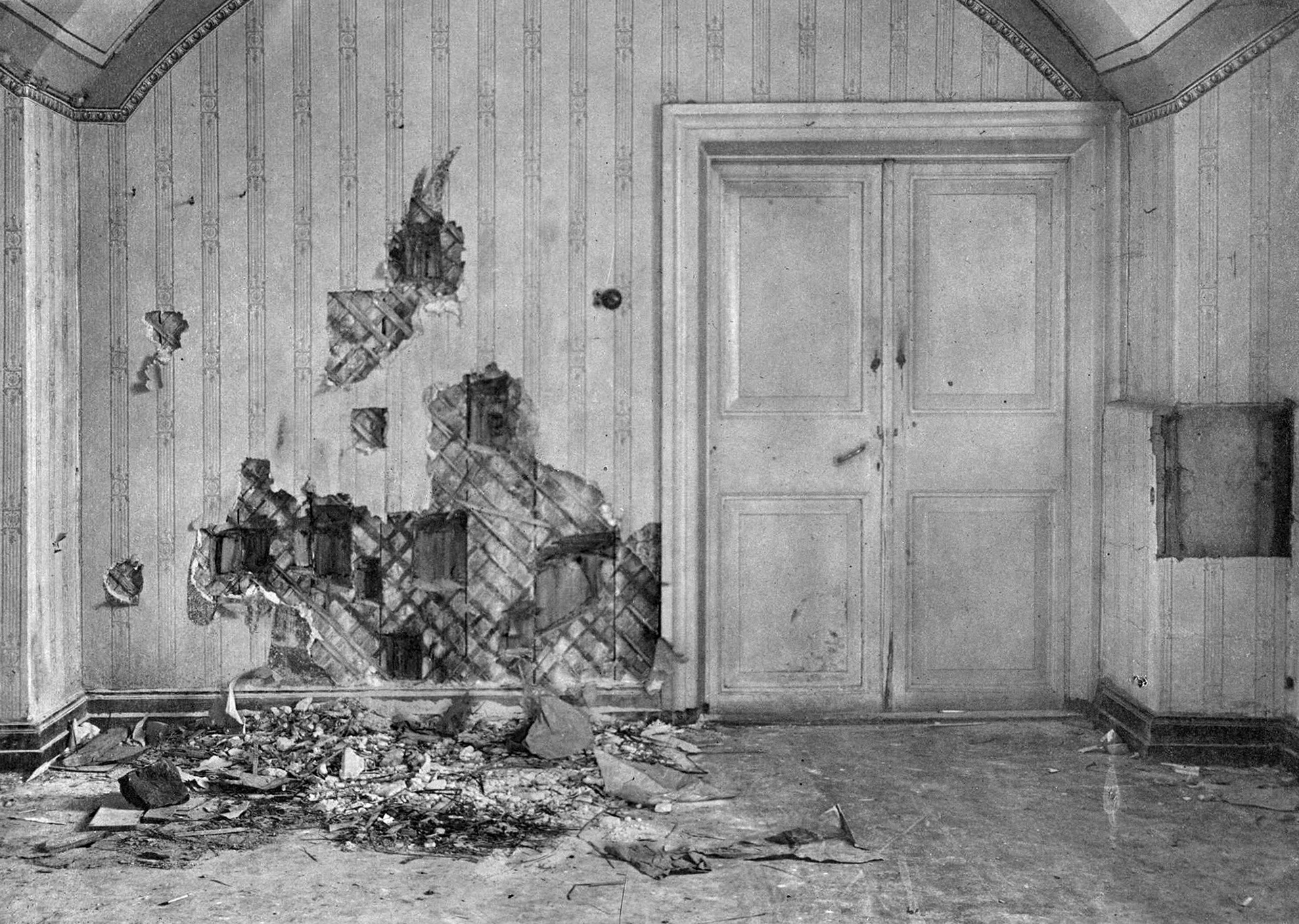
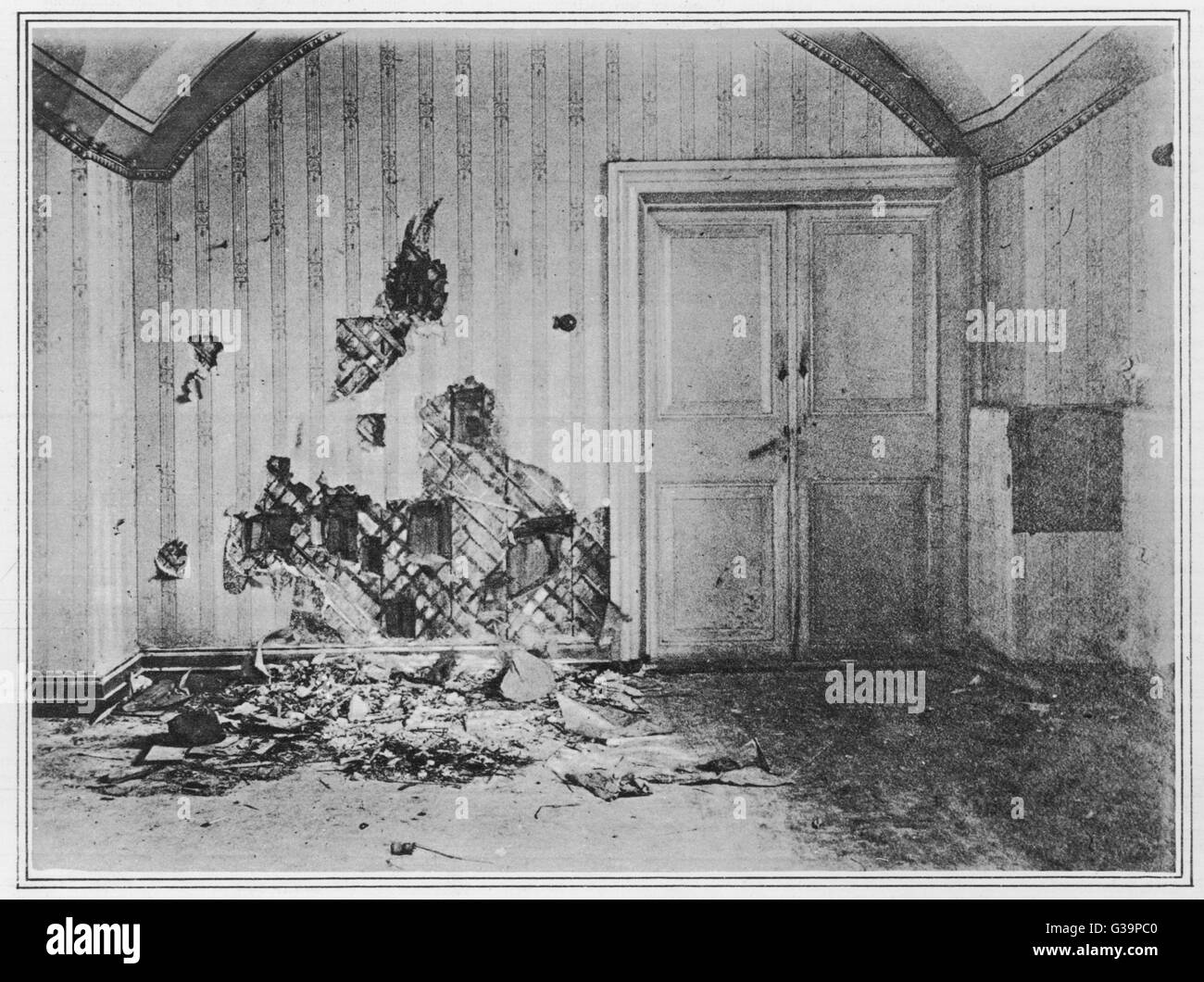
They were discovered by a historian and a geologist nearly 20 years ago, but their location was kept secret until the Communists’ grip on power began slipping at the end of the last decade. An official party retrieved the remains in 1991, and they were warehoused at the Yekaterinburg city morgue until Wednesday morning. By air, by hearse and by shoulder, the remains of Russia’s last czar and his family ended their tortured 20th century journey home to this imperial capital Thursday for a belated burial on today’s 80th anniversary of the Romanovs’ deaths before a Bolshevik firing squad. Room in the Ipatiev House, Yekaterinburg, where the Russian royal family was brutally murdered, 1918. In 1919, Maria Feodorovna, widow of Alexander III, and mother of Nicholas II, managed to escape Russia aboard HMS Marlborough, which her nephew, King George V of the United Kingdom, had sent to rescue her, at the urging of his own mother, Queen Alexandra, who was Maria's elder sister.
Alexander I, succeeded him on the throne and later died without leaving a son. The succession was far from smooth, however, as hundreds of troops took the oath of allegiance to Nicholas's elder brother, Constantine Pavlovich who, unbeknownst to them, had renounced his claim to the throne in 1822, following his marriage. The confusion, combined with opposition to Nicholas' accession, led to the Decembrist revolt.[1] Nicholas I fathered four sons, educating them for the prospect of ruling Russia and for military careers, from whom the last branches of the dynasty descended.
It's been more than 100 years since the Tsar and his wife and children were brutally executed, but the story still has the power to shock. Over the years 2000 to 2003, the Church of All Saints, Yekaterinburg was built on the site of Ipatiev House. According to the presumption of innocence, no one can be held criminally liable without guilt being proven. In the criminal case, an unprecedented search for archival sources taking all available materials into account was conducted by authoritative experts, such as Sergey Mironenko, the director of the largest archive in the country, the State Archive of the Russian Federation. The study involved the main experts on the subject – historians and archivists. And I can confidently say that today there is no reliable document that would prove the initiative of Lenin and Sverdlov.
After a stay in England with Queen Alexandra, she returned to her native Denmark, first living at Amalienborg Palace, with her nephew, King Christian X, and later, at Villa Hvidøre. Upon her death in 1928 her coffin was placed in the crypt of Roskilde Cathedral, the burial site of members of the Danish royal family. Yurovsky had, meanwhile, been planning the family’s murder, though with a surprising lack of efficiency for such a ruthless, dedicated Bolshevik.




No comments:
Post a Comment